Property Preservation Risk Management Guide (USA)
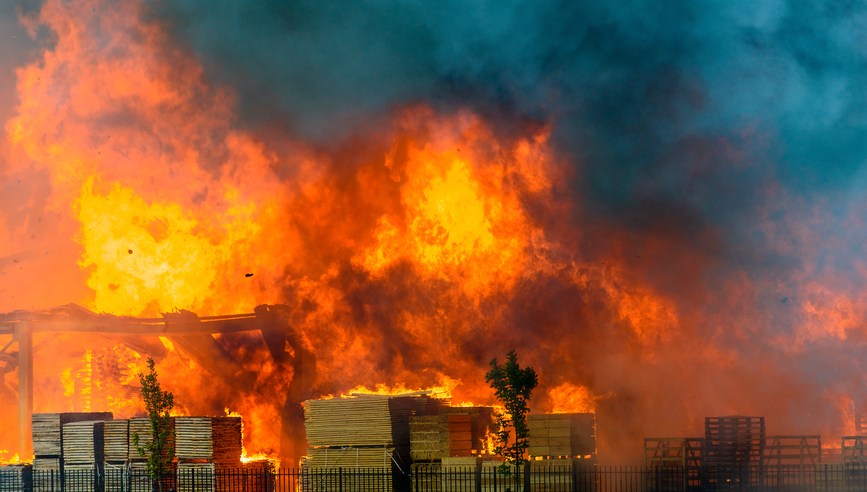
How long can you afford to be shut down by a fire, flood, man-made or natural disaster? Will your customers wait for you to get back in business? Will your experienced employees wait to return to work or be hired by a competitor? If you’ve never suffered a severe property loss, it may be hard to imagine the impact on your operations, customer base and future profits. However, the potential for loss cannot be ignored. Your company’s vulnerabilities must be identified so they can be eliminated or controlled through well-established property management programs.
Management programs
Management programs all have common elements. To be successful, management must fully support these programs, which include:
A written policy — A clearly communicated policy from top management will help express the importance of the policy to employees. The policy should explain why the specific procedures are being established and what the benefits are to the company and all employees.
Established responsibilities — Individuals must have assigned responsibilities so they can be held accountable for the success of a program. They also should be aware of others who have assigned responsibilities within a specific program and who to go to with specific questions, problems, ideas and feedback.
Education — Employees must be aware of their roles in the property preservation process. The expectations that employees (including management) follow all policies, alert management of unsafe conditions and know their roles in an emergency must be clearly communicated and reinforced regularly.
Training — Employees who are assigned specific responsibilities may need initial training and refresher training within a specified time period.
Audit and update — Review programs periodically. The extent of the review and who reviews the program depends on the specific program and how vital it is to the operation. Consider the management team, Human Resources director, local fire code officials, fire marshal or Risk Control consultant as resources for helping you review a program. An annual review is a good starting point, but critical programs may warrant more frequent reviews and updating.
What is property preservation?
Property preservation includes the use of various risk management programs designed to help prevent or minimize the frequency and severity of property losses. It is this preservation of property philosophy that is passed down from top management to all employees. Property preservation includes company policies and programs and encompasses employee training procedures for before, during and after a loss. To be effective, all employees must understand their roles in preserving the company’s assets.
Components of property preservation
Core management programs
The elements that make up a property preservation program may vary depending on the facility’s operations. However, there are core programs that every company should implement. These programs should center around two key components of property safety: prevention and protection. Each facility needs to be evaluated independently for the potential sources of property-related loss. Then, prevention-related programs must be developed to minimize the potential for loss. Protection features of the facility also must be identified and evaluated. Protection-related programs help ensure that necessary protection systems are maintained.
Prevention programs
- Preventive maintenance to buildings and equipment.
- Cutting, welding and hot work.
- No smoking or restricted smoking.
- Controls affecting contractors.
- Housekeeping
- Electrical equipment inspection and maintenance (including infrared scans).
- Combustion safeguards inspection and testing.
- Process safety equipment inspection and testing.
Protection programs
- Inspection, testing and maintenance of fire protection systems.
- Fire protection systems impairment.
This guide, and related information at travelers.com, can assist you in developing core management programs for your facility. Additional programs may be needed to round out the property preservation program, depending on your specific business, location and facility.
Prevention programs
Building and equipment preventive maintenance
Maintenance is an important component in preventing a property loss. From regular inspections and maintenance of roof surfaces to detailed electrical preventive maintenance, it is important to identify key building components and equipment. The second step is to determine what preventive maintenance needs exist for each critical item. Identify the frequency of inspection, testing and maintenance and who is responsible for completing each task. Since electrical ignition is a leading cause of fires, electrical preventive maintenance
is important for all buildings. Your business, type and age of equipment and dependency on electrical service will determine the extent of your electrical preventive maintenance program. Also, guidance is often available from the equipment manufacturer or the servicing contractor.
Cutting, welding and hot work
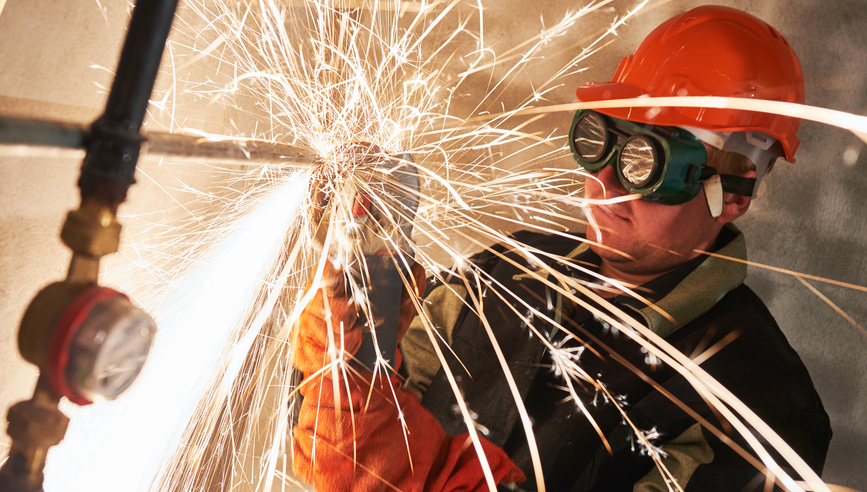
Cutting, welding and other hot work operations that use portable equipment present a severe hazard because these operations introduce ignition sources into various areas of the facility. The National Fire Protection Association (NFPA) estimates that approximately 14 percent of all fires in industrial properties have been caused by improper procedures or equipment used during hot work operations. Hot work is defined as any operation that generates heat, sparks or flames. Fires caused by hot work operations routinely result from sparks or molten globules of metal that travel distances or fall through cracks onto unseen combustibles. The combustible material smolders and eventually bursts into flames, sometimes after work has ended and employees have left the area. Other times, the heat or flame ignites combustible or flammable materials directly if the materials are located too close to the hot work operation.
The common reasons for fires caused by cutting, welding and hot work operations are:
- Inadequate work site preparation.
- Defective equipment
- Outside contractors failing to comply with hot work precautions.
- Poor housekeeping.
- Conducting operations in areas where the sprinkler protection is shut off.
- Failure to maintain fire watches or to provide adequate fire extinguishing equipment.
Understanding the hot work permit system
Small facilities might believe that, because hot work is an infrequent occurrence, a formalized permit system is unnecessary. Actually, if hot work is performed infrequently, it is even more important to have an established program because employees may be unfamiliar with the hazards and precautions they must take. On the other hand, large facilities with established programs must be careful not to become complacent. When permits are issued regularly, the permit process tends to become a formality. The permit may be issued without careful assessment of the area to verify that necessary precautions are taken.
Cutting and welding permits
One of the most successful methods to control these types of fires is to implement a Hot Work Permit system whenever hot work operations are conducted by maintenance personnel or contractors outside the designated, safely arranged area in the maintenance shop. The permit system, combined with strong support by management and trained employees, can help reduce this exposure.
No smoking or restricted smoking
Each year, there are more than 100,000 fires associated with smoking material, resulting in hundreds of deaths, thousands of injuries and hundreds of millions of dollars in property damage. Fires started from smoking materials can be eliminated with a strong policy and established procedures.
All employees and visitors to your facility should be aware of the smoking policy through posted signs. Whenever possible, do not permit smoking in the building. Smoking areas should be outside the building, ideally well away from the building. Be sure to designate areas and provide proper receptacles. If smoking is permitted in designated areas within the facility, those areas must be clearly identified and located away from areas with combustible or flammable materials. Proper receptacles must be provided. If smoking is permitted throughout the facility, then non-smoking areas must be clearly identified with signs. These non-smoking areas would include process areas with flammable liquids, flammable liquid storage areas, product storage areas, trash rooms or any area where a fire could grow quickly. All areas not protected by an automatic sprinkler system should be designated as non-smoking. Again, proper receptacles are critical to controlling the fire potential.
Controls affecting contractors
Many businesses hire contractors when a particular expertise is required to do a job, or when they choose to transfer the risk of a particular job or process to another company to avoid the financial consequences from a loss that could result from the specified work. The selected contractors may have the required expertise to do the job, but they may not be familiar with the hazards of your workplace. These work site hazards, together with the hazards associated with the contractor’s work, could result in personal injury or property loss if not properly controlled. However, the loss potential can be controlled through proper selection practices, training programs and contractual agreements.
Unlike the facility’s employees, the contractor has no vested interest in the continued productivity of the plant. In fact, because of time and money constraints, the contractor may have more of an incentive to do things as quickly as possible, regardless of the safety concerns involved. Therefore, it is important to closely supervise contractors and demand that all rules and regulations that apply to employees be followed by contractors. Travelers urges its policyholders to have written contracts that specify the standards of conduct for contractors and state the liability in the event of a loss. The contract also should define the exact services or work to be completed and require the contractor to comply with company policies.
Beyond contracts
- Select contractors who have properly trained personnel and who are aware of the magnitude of the risks involved.
- Check references. Create relationships with qualified, specialty contractors.
- Obtain Certificates of Insurance for each project. Align acceptable limits of liability with the degree of risk for the specific job.
- Advise contractors of the safety policies and procedures for your facility, and require them to follow the same safe working practices as employees. This includes the various management programs that make up your property preservation program.
- Advise contractors about any flammable materials or hazardous conditions and to take special precautions.
- Evaluate the need for additional or alternative safety precautions during the contracted work. For example, a fire watch is needed during hot work. If the sprinkler system must be turned off, you might need charged fire hoses and a response team.
- Dismiss contractors who do not follow your policy and procedures.
- Monitor all contractors while on your property. Assign an employee to oversee the contractors’ work and be directly responsible for the contractors’ actions. Follow up on work during the project and after the contracted project is completed.
Housekeeping
A good housekeeping program involves common aspects of cleanliness, order and waste control. It is basic to fire safety and should be a major concern of every company. The development and implementation of a good housekeeping program will vary by facility.
Some buildings are easier to maintain than others because of their layout, age or construction type. Some facilities are more difficult to keep clean because they produce more waste, leakage, vapors, etc. Whether it is an easy or difficult task, proper housekeeping is a vital part of any property preservation program.
Good housekeeping can improve production, quality and efficiency. Quality is easier to maintain, and people tend to work more efficiently and accurately if their surroundings are clean and orderly. Good housekeeping also helps prevent or minimize fires. When a company has poor housekeeping practices, its loss potential escalates. Housekeeping efforts must address both interior and exterior building areas. Arrange yard storage areas appropriately. The location of combustible storage, trash receptacles and smoking areas must be away from exterior building walls.
Poor housekeeping
- Provides more places for a fire to start.
- Provides a greater combustible load on which an initial fire can feed.
- Creates a greater continuity of combustibles and makes fire spread rapidly.
- Creates the potential for flash fires or dust explosions when layers of lint or dust are allowed to accumulate
- Increases the potential for spontaneous ignition.
Identify housekeeping needs and communicate individual responsibilities to employees. It also is important that proper equipment is available to employees. For example, providing receptacles with self-closing lids for waste rag collection.
Protection programs
Now more than ever, buildings are protected with automatic sprinkler systems and other automatic fire protection systems. These automatic fire protection systems tend to work very well. In fact, automatic sprinkler systems have almost a perfect performance record. History shows that the majority of fires in buildings with sprinklers are controlled or completely extinguished. Many fires are controlled using only a few sprinkler heads.
But sprinkler systems are not perfect. When sprinklers or other fire protection systems fail, the results can be devastating. A business can lose its entire operation if the fire protection system fails. Insurance may not cover all of this loss, including the loss of income when customers and other business partners use a competitor’s goods or services while the business rebuilds. Many companies never fully recover from a fire loss.
When sprinkler systems do fail, there may be a number of reasons why, such as an increase in the hazard due to a change in the process (e.g., introduction of oxidizers, or flammable or combustible liquids, dusts, gases, etc.). Another reason may be due to changes in storage height, packaging or configuration. However, the two most common reasons are lack of proper maintenance or a valve closure that prevents adequate water from entering the system. Both of these failures are preventable through practiced risk management programs.
Inspection, testing and maintenance of fire protection systems
Sprinklers and other fire protection systems may fail because of inadequate repair and maintenance. One of the biggest misconceptions is that fire protection systems are maintenance-free. Since these protection systems are fundamentally mechanical, they require a certain level of maintenance. Nearly 15 percent of unsatisfactory sprinkler system performance can be attributed to sprinkler systems that were mechanically impaired due to lack of maintenance and testing.
Because fire emergencies usually occur without warning, it’s important to have fire protection systems in good condition and ready to operate at all times. To provide the assurance that these fire protection systems will operate when needed, a detailed series of written inspection, testing and maintenance programs must be developed and implemented.
Consult manufacturer’s instructions for conducting proper inspection, testing and maintenance procedures on specific fire protection equipment. The NFPA has developed standard frequencies for inspection, testing and maintenance on various fire protection equipment and extinguishing systems. For sprinkler systems, the applicable standard is NFPA 25, Standard for the Inspection, Testing and Maintenance of Water-Based Fire Protection Systems. Other types of fire protection equipment are covered under various NFPA standards. To learn more about NFPA or to obtain a copy of a specific code or standard, visit the NFPA website at nfpa.org.
Fire protection system impairment
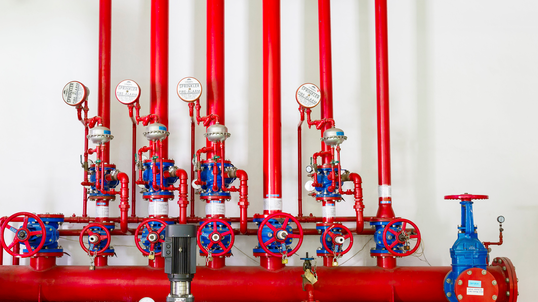
Properly maintaining fire protection equipment is essential in reducing property damage losses. Nothing else in the care and maintenance of fire protection equipment is as important as making sure all control valves are completely open and each piece of equipment is in the “automatic” mode.
According to statistics published by NFPA, nearly 60 percent of sprinkler system failures from 2010-2014 were due to shut valves.1 For this reason, it is critical that fire protection systems are visually inspected regularly and impairments handled consistently.
An impairment exists when fire protection equipment is taken out of service by shutting off the sprinkler system, or when fire protection equipment is taken out of “automatic mode” and placed in “manual mode.” Any equipment installed to detect, control or extinguish fires or explosions should be included in a fire protection equipment impairment program.
Systems to include are:
- Automatic sprinkler systems
- Fire protection water supplies
- Fire pumps
- Gaseous extinguishing systems
- Chemical extinguishing systems
- Explosion suppression systems
- Fire alarm systems
To help minimize the length of impairments and manage fire hazards while protection systems are down, the Travelers Fire Protection Impairment Guide outlines procedures to follow before, during and after a fire protection system impairment. This guide also includes “Out of Service” tags to aid you in monitoring impairments and documenting equipment restoration.
Travelers Fire Protection Impairment Report Form
Additionally, use the Travelers Fire Protection Impairment Report Form to help you track and manage system impairments. The reporting system is designed to help you manage and communicate when a sprinkler system, fire pump, special extinguishing system or other vital components of your fire protection system is out of service, and more importantly, when it is restored back to service, so you can keep your business protected.
Benefits of prompt claim reporting
By being proactive, you can work to minimize losses and accidents. But when a loss or accident does occur, reporting your claim promptly is extremely important. When you report your claim promptly, you benefit from a proven, efficient claim handling process and effective cost control for damages, injuries and other expenses. To make your claim reporting experience as quick and easy as possible, click on the Claim Services link at travelers.com for details on prompt claim reporting via phone, fax or Internet.
1 NFPA, Sprinkler Performance – How are we doing? How can NFPA 13 and 25 help?